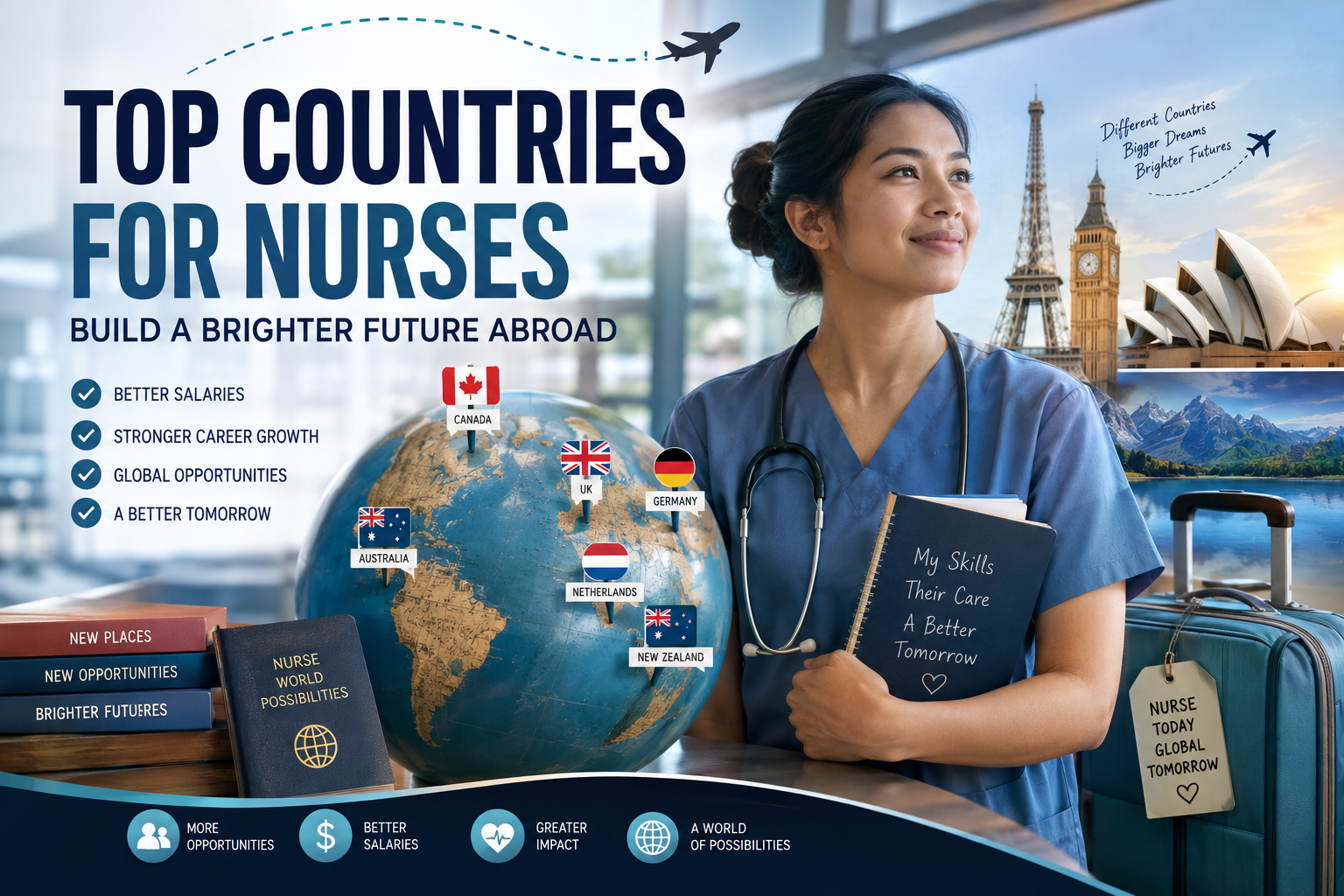
Nursing has become one of the most in-demand professions worldwide. As populations age, healthcare systems expand, and hospitals face ongoing staff shortages, countries across Europe, North America, Australia, and the Middle East are actively recruiting qualified nurses from overseas.
For many nurses, working abroad offers more than just a higher salary. It provides opportunities to build an international career, access world-class healthcare systems, improve work-life balance, and create a better future for themselves and their families.
Many employers also provide attractive benefits such as visa sponsorship, relocation assistance, paid accommodation, sign-on bonuses, and professional development opportunities.
Whether you’re a registered nurse, intensive care nurse, emergency nurse, theatre nurse, mental health nurse, or aged care specialist, there are excellent opportunities available around the world.
This guide explores the best countries for nurses looking to work abroad, expected salaries, visa options, and how to successfully secure an international nursing position.
Why Nurses Are in High Demand Worldwide
Healthcare systems across many developed countries are experiencing unprecedented demand for qualified nurses.
Several factors are driving this shortage:
- Ageing populations
- Increasing chronic diseases
- Expanding healthcare services
- Retiring nursing workforce
- Population growth
- Hospital expansion
- Greater demand for aged care
- Global shortage of healthcare professionals
As a result, governments and hospitals are increasingly recruiting internationally to fill vacant positions.
Benefits of Working Abroad as a Nurse
Moving overseas can provide significant professional and personal advantages.
Many international nursing positions include:
- Higher salaries
- Visa sponsorship
- Employer-paid relocation
- Temporary accommodation
- Paid annual leave
- Pension contributions
- Overtime opportunities
- Career progression
- Continuing education
- Family relocation support
These benefits often make international opportunities financially rewarding even after accounting for relocation costs.
Best Countries for Nurses
Several countries consistently rank among the world’s best destinations for internationally qualified nurses.
| Country | Demand | Salary Potential |
|---|---|---|
| Australia | Extremely High | AU$80,000–AU$150,000 |
| Canada | Extremely High | CA$75,000–CA$120,000 |
| United States | Extremely High | US$75,000–US$150,000+ |
| United Kingdom | Very High | £30,000–£60,000+ |
| Germany | Very High | €40,000–€70,000 |
| Netherlands | High | €45,000–€75,000 |
| Ireland | Very High | €40,000–€75,000 |
| New Zealand | High | NZ$75,000–NZ$130,000 |
| Norway | High | NOK650,000–NOK900,000 |
| Switzerland | Extremely High | CHF80,000–CHF130,000 |
Many employers also provide relocation packages and visa sponsorship for eligible international applicants.
Australia
Australia continues to experience a nationwide shortage of nurses across hospitals, aged care facilities, community health services, and regional healthcare providers.
Demand remains particularly strong for:
- Registered Nurses
- ICU Nurses
- Emergency Nurses
- Theatre Nurses
- Mental Health Nurses
- Midwives
Many employers offer:
- Visa sponsorship
- Relocation assistance
- Temporary accommodation
- Professional development
- Flexible work arrangements
Typical salary:
AU$80,000–AU$150,000 annually
Canada
Canada actively recruits internationally qualified nurses through provincial healthcare systems and employer sponsorship.
Strong demand exists across:
- Ontario
- British Columbia
- Alberta
- Saskatchewan
- Manitoba
- Nova Scotia
Benefits often include:
- Relocation assistance
- Immigration support
- Pension plans
- Paid leave
- Career progression
Typical salary:
CA$75,000–CA$120,000 annually
United States
The United States offers some of the highest nursing salaries in the world, particularly in specialised roles.
High-demand areas include:
- Intensive Care
- Emergency Medicine
- Oncology
- Operating Theatre
- Cardiology
- Neonatal Care
Many hospitals recruit international nurses through employment-based visa programs.
Typical salary:
US$75,000–US$150,000+ annually
United Kingdom
The UK’s National Health Service (NHS) continues recruiting thousands of nurses from overseas each year.
Benefits often include:
- Visa sponsorship
- Paid annual leave
- Pension scheme
- Career progression
- Continuing education
Specialist nurses often enjoy additional salary supplements depending on location and experience.
Typical salary:
£30,000–£60,000+ annually
Germany
Germany’s ageing population has created strong demand for healthcare professionals.
International nurses are recruited into:
- Hospitals
- Rehabilitation centres
- Elderly care facilities
- Community healthcare
Many employers assist with:
- Visa sponsorship
- German language training
- Accommodation
- Qualification recognition
Typical salary:
€40,000–€70,000 annually
Netherlands
The Netherlands offers excellent working conditions and a strong healthcare system.
International nurses may find opportunities in:
- Public hospitals
- Private clinics
- Community healthcare
- Aged care
Many employers provide support with registration and relocation.
Typical salary:
€45,000–€75,000 annually
Ireland
Ireland continues to recruit nurses internationally due to ongoing workforce shortages.
Benefits commonly include:
- Employment permits
- Relocation support
- Paid leave
- Pension contributions
- Career development
Demand remains particularly strong in public hospitals.
Typical salary:
€40,000–€75,000 annually
New Zealand
New Zealand offers nurses an excellent work-life balance alongside competitive salaries.
Healthcare providers frequently recruit overseas professionals in:
- Emergency departments
- Surgical wards
- Rural healthcare
- Aged care
Many employers provide relocation assistance and visa support.
Typical salary:
NZ$75,000–NZ$130,000 annually
Norway
Norway offers attractive salaries and one of the highest standards of living in the world.
Healthcare professionals benefit from:
- Strong employment protections
- Generous annual leave
- Public healthcare
- Excellent pension schemes
Learning Norwegian is generally required before practising.
Typical salary:
NOK650,000–NOK900,000 annually
Switzerland
Switzerland consistently ranks among the world’s highest-paying countries for nurses.
Benefits often include:
- Excellent salaries
- Modern hospitals
- Strong employee benefits
- Career development
- High quality of life
Knowledge of German, French, or Italian is typically required depending on the region.
Typical salary:
CHF80,000–CHF130,000 annually
Nursing Specialisations With the Highest Salaries
Some nursing specialties command significantly higher salaries due to increased demand and advanced clinical expertise.
These include:
- Intensive Care Nurse
- Emergency Nurse
- Nurse Practitioner
- Operating Theatre Nurse
- Oncology Nurse
- Cardiac Nurse
- Neonatal Nurse
- Anaesthetic Nurse
- Mental Health Nurse
- Clinical Nurse Specialist
Professionals with advanced qualifications and specialised experience often receive higher salaries and stronger relocation packages.
How to Work as a Nurse Abroad
Working as a nurse in another country requires more than simply submitting job applications. Most countries have licensing requirements, qualification assessments, language standards, and immigration processes that must be completed before you can begin practising.
The good news is that many healthcare systems actively support international nurses throughout this process, offering guidance, visa sponsorship, and relocation assistance.
Do You Need Your Nursing Qualification Recognised?
Yes.
Almost every country requires internationally qualified nurses to have their qualifications assessed before they can practise.
Depending on your destination, this may involve:
- Verification of nursing qualifications
- Assessment of clinical experience
- English language testing
- Criminal background checks
- Health examinations
- Registration with the national nursing authority
Starting this process early can significantly reduce delays later.
Best Websites to Find Nursing Jobs Abroad
Many hospitals and healthcare organisations recruit directly through trusted employment websites.
Some of the best job platforms include:
- LinkedIn Jobs
- Indeed
- Health eCareers
- NHS Jobs (United Kingdom)
- Health Workforce Australia
- Job Bank Canada
- SEEK Australia
- EURES Jobs
- Glassdoor
- NursingJobs.com
Search using keywords such as:
- Registered Nurse Visa Sponsorship
- International Nurse Jobs
- ICU Nurse Abroad
- Nursing Jobs with Relocation Package
- Overseas Registered Nurse
- Healthcare Jobs Visa Sponsorship
These search terms often identify employers already recruiting internationally.
English Language Requirements
Many English-speaking countries require proof of language proficiency.
Common accepted tests include:
- IELTS Academic
- OET (Occupational English Test)
- TOEFL (selected countries)
Minimum score requirements vary depending on the country’s nursing authority.
If you’re applying to countries such as Germany, Norway, Switzerland, or the Netherlands, you may also need to demonstrate proficiency in the local language before registration.
Build a Professional Nursing Resume
Healthcare employers look for resumes that clearly demonstrate clinical competence and patient care experience.
Your resume should include:
- Professional summary
- Nursing registration
- Clinical experience
- Education
- Certifications
- Professional development
- Languages spoken
- Key achievements
Rather than simply listing duties, highlight measurable accomplishments.
For example:
Instead of:
- Worked in the emergency department.
Write:
- Provided emergency care for an average of 40 patients per shift while maintaining high clinical standards and supporting multidisciplinary teams.
Instead of:
- Managed patient care.
Write:
- Coordinated care plans for post-operative patients, contributing to improved recovery outcomes and reduced readmission rates.
Write a Strong Cover Letter
A personalised cover letter can significantly strengthen your application.
Explain:
- Why you want to work in that country.
- Why you’re interested in the hospital.
- Your clinical experience.
- Your nursing specialty.
- Your willingness to relocate.
- Your registration status or progress.
Employers appreciate candidates who demonstrate genuine motivation and professionalism.
Prepare for Nursing Interviews
Most healthcare employers use structured interviews.
Typical interview stages include:
| Stage | Purpose |
|---|---|
| Application Review | Assess qualifications |
| HR Interview | Communication and motivation |
| Clinical Interview | Evaluate nursing knowledge |
| Manager Interview | Assess experience and cultural fit |
| Employment Offer | Salary and relocation discussion |
Interview questions often focus on:
- Patient safety
- Clinical decision-making
- Teamwork
- Communication
- Emergency situations
- Ethical dilemmas
Preparing examples from your own clinical experience can help you answer confidently.
Visa Sponsorship Opportunities
Many countries actively sponsor internationally qualified nurses because of ongoing workforce shortages.
Visa sponsorship is commonly available in:
- Australia
- Canada
- United States
- United Kingdom
- Germany
- Ireland
- New Zealand
Employer sponsorship often includes:
- Visa application support
- Immigration guidance
- Relocation assistance
- Temporary accommodation
- Flights (in some cases)
Always confirm sponsorship details before accepting an offer.
Documents You May Need
Most employers request:
- Updated nursing resume
- Passport
- Nursing qualification certificates
- Nursing registration documents
- Professional references
- Employment history
- English language test results (if required)
- Criminal background check
- Immunisation records
Having these documents prepared can speed up both recruitment and visa processing.
Salary Expectations by Experience
Nursing salaries generally increase with experience, qualifications, and clinical specialisation.
| Experience Level | Typical Salary (Equivalent) |
|---|---|
| Graduate Nurse | US$50,000–US$70,000 |
| Registered Nurse | US$70,000–US$100,000 |
| Senior Registered Nurse | US$90,000–US$120,000 |
| Clinical Nurse Specialist | US$110,000–US$150,000+ |
| Nurse Practitioner | US$120,000–US$180,000+ |
Actual salaries vary depending on the country, healthcare system, specialty, and overtime opportunities.
Cost of Living Matters Too
A higher salary doesn’t always mean you’ll have more disposable income.
Before accepting an overseas position, consider:
- Housing costs
- Taxes
- Healthcare expenses
- Public transport
- Childcare
- Utilities
- Food costs
For example, Switzerland offers very high salaries, but it also has one of the highest costs of living in Europe. Meanwhile, countries like Germany or Ireland may provide a better balance between income and living expenses for some nurses.
Common Mistakes International Nurses Make
Many qualified nurses delay their overseas careers because of avoidable mistakes.
Common examples include:
- Waiting too long to begin registration.
- Applying before meeting language requirements.
- Sending generic resumes.
- Ignoring licensing requirements.
- Poor interview preparation.
- Applying only to one country.
- Not researching visa options.
- Giving up after a few applications.
Successful international nurses often apply strategically across multiple employers and countries while completing their registration requirements in parallel.
Tips to Increase Your Chances of Getting Hired
Competition exists, but there are proven ways to stand out.
Focus on:
- Completing all registration requirements early.
- Gaining experience in high-demand specialties.
- Maintaining up-to-date certifications.
- Building a professional LinkedIn profile.
- Tailoring every application.
- Preparing thoroughly for interviews.
- Networking with healthcare recruiters.
- Applying consistently.
Hospitals around the world are actively looking for skilled nurses who can provide high-quality patient care. Demonstrating professionalism, clinical competence, and a willingness to relocate can significantly improve your chances of receiving an international job offer.
Top Employers Recruiting International Nurses
Healthcare providers around the world continue to recruit internationally qualified nurses to help address ongoing workforce shortages. Many hospitals and healthcare systems offer structured recruitment programmes, visa sponsorship, relocation assistance, and ongoing professional development.
Common employers include:
- Public hospitals
- Private hospitals
- Community healthcare providers
- Aged care organisations
- Rehabilitation centres
- Mental health facilities
- Specialist medical centres
- University hospitals
Many employers also provide flexible rosters, overtime opportunities, career progression, and continuing education programmes.
Nursing Specialties With the Highest Demand
Although registered nurses remain in high demand, some specialties are experiencing even greater shortages.
These include:
- Intensive Care (ICU)
- Emergency Department
- Operating Theatre
- Oncology
- Mental Health
- Neonatal Intensive Care (NICU)
- Paediatrics
- Aged Care
- Dialysis
- Community Nursing
Developing expertise in one of these specialties can increase both your salary and your chances of securing visa sponsorship.
Benefits International Nurses Often Receive
Many overseas employers offer far more than a competitive salary.
Depending on the employer and country, your employment package may include:
| Benefit | Commonly Offered |
|---|---|
| Visa Sponsorship | Yes |
| Relocation Assistance | Yes |
| Temporary Accommodation | Yes |
| Flight Reimbursement | Often |
| Annual Leave | Yes |
| Pension Contributions | Yes |
| Paid Professional Development | Yes |
| Overtime Opportunities | Yes |
| Family Relocation Support | Some employers |
| Health Insurance | Often included |
These benefits can save new arrivals thousands of dollars during their move overseas.
Can Your Family Move With You?
In many countries, yes.
If you receive a work visa through employer sponsorship, your spouse and dependent children may also be eligible to relocate.
Depending on the destination country, family members may receive:
- Dependent visas
- Access to healthcare
- Permission to study
- Work rights for spouses
- Access to public education for children
Always check the specific immigration rules for the country where you intend to work.
Common Challenges International Nurses Face
Moving overseas is exciting, but it’s important to understand the challenges you may encounter.
These can include:
- Registration delays
- Language requirements
- Cultural differences
- Adjusting to new healthcare systems
- Homesickness
- Different clinical protocols
- Cost of relocation
- Licensing examinations
Preparing in advance can make the transition much smoother.
Frequently Asked Questions
Which country pays nurses the highest salary?
Switzerland and the United States generally offer some of the highest nursing salaries in the world, particularly for experienced nurses and specialist roles.
Australia, Canada, and Norway also provide highly competitive salaries combined with excellent working conditions.
Which country is easiest for international nurses?
This depends on your qualifications and experience.
Countries such as:
- Australia
- Canada
- United Kingdom
- Ireland
- New Zealand
have well-established pathways for internationally qualified nurses and regularly recruit overseas professionals.
Can nurses get visa sponsorship?
Yes.
Many hospitals and healthcare providers sponsor qualified international nurses because of ongoing workforce shortages.
Visa sponsorship is commonly available in:
- Australia
- Canada
- United States
- United Kingdom
- Germany
- Ireland
- New Zealand
Do I need work experience before applying?
Most employers prefer candidates with at least one to two years of clinical experience.
However, some graduate recruitment programmes also accept newly qualified nurses, depending on the country and employer.
Is IELTS required?
Many English-speaking countries require proof of English proficiency through exams such as IELTS Academic or OET.
Language requirements vary by country and nursing registration authority.
How long does the recruitment process take?
The process varies depending on the country and licensing requirements.
For many international nurses, recruitment, registration, and visa processing typically take between three and twelve months.
Planning ahead can help reduce delays.
Mistakes to Avoid Before Moving Abroad
Many nurses delay their international careers because of preventable mistakes.
Avoid:
- Applying before meeting registration requirements.
- Ignoring English or local language requirements.
- Sending the same resume to every employer.
- Accepting job offers without understanding the full employment package.
- Failing to research the cost of living.
- Waiting until receiving an offer before preparing documents.
- Not asking about career progression opportunities.
Taking a proactive approach can save time, reduce stress, and improve your chances of success.
Tips for Building a Successful International Nursing Career
Working abroad is not just about earning a higher salary. It’s also an opportunity to gain valuable experience, expand your clinical skills, and build a long-term international career.
To maximise your opportunities:
- Keep your nursing registration current.
- Complete specialist certifications where possible.
- Gain experience in high-demand departments.
- Build a professional LinkedIn profile.
- Attend healthcare conferences and training.
- Continue developing your clinical skills.
- Stay informed about changes to immigration and registration requirements.
- Maintain strong professional references.
Healthcare employers value nurses who demonstrate a commitment to continuous learning and high standards of patient care.
Final Thoughts
Nursing remains one of the most respected and rewarding professions in the world, and demand for qualified nurses continues to grow across many countries. Ageing populations, expanding healthcare services, and ongoing workforce shortages have created exceptional opportunities for internationally qualified professionals.
Whether you’re considering Australia, Canada, the United States, the United Kingdom, Germany, Ireland, New Zealand, the Netherlands, Norway, or Switzerland, there are numerous pathways to build a successful career abroad.
While each country has its own licensing, language, and immigration requirements, many employers actively support international nurses by offering visa sponsorship, relocation assistance, professional development, and long-term career opportunities.
The key to success is preparation. Begin your registration process early, strengthen your clinical experience, tailor your applications, and stay committed throughout the recruitment journey.
With the right qualifications, determination, and planning, working abroad as a nurse can provide not only a higher income but also invaluable international experience, career growth, and a better quality of life for you and your family.